
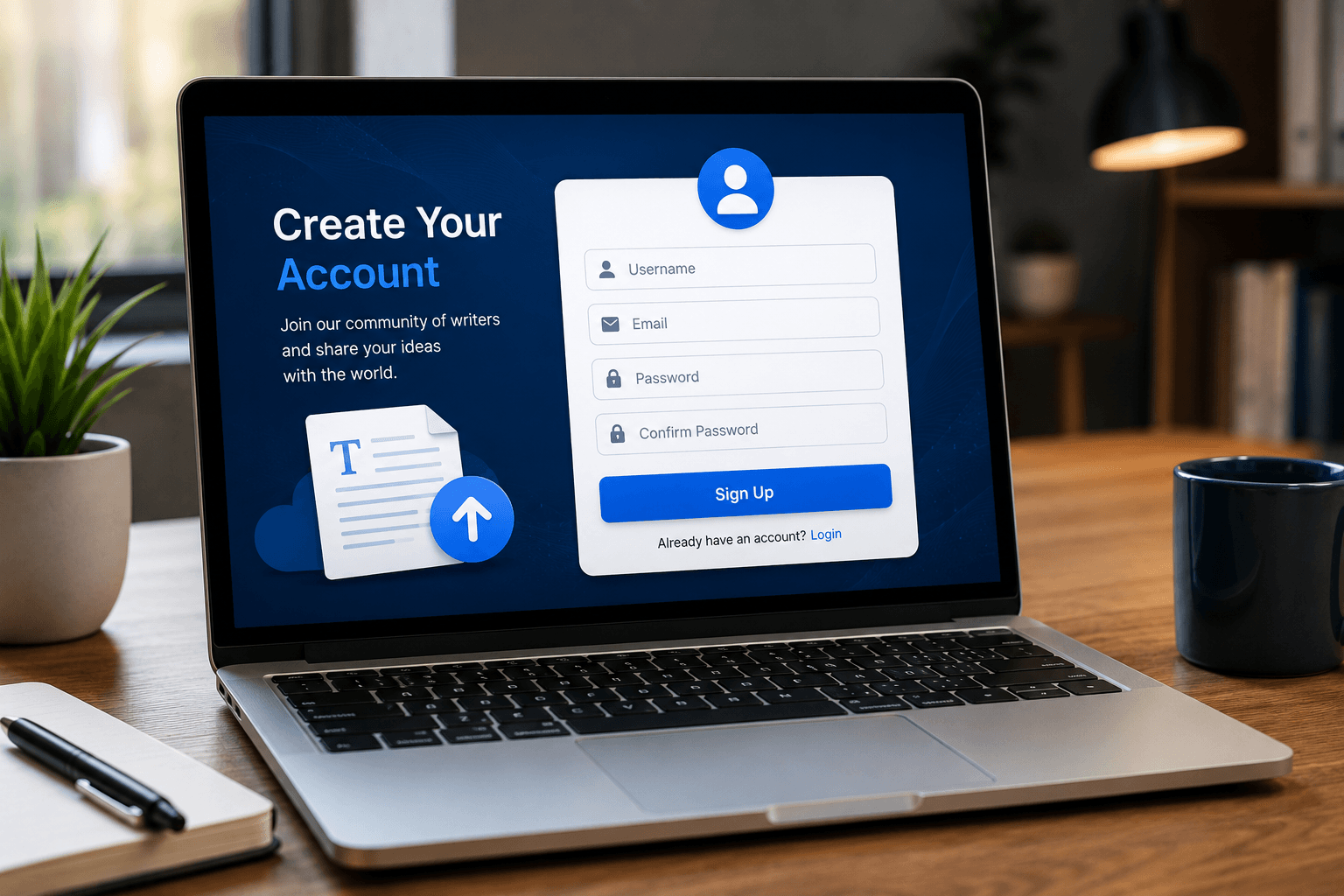
Most people don’t think much about the account behind their favorite content platform until something goes wrong, or until they decide they want to start publishing themselves. An uploadarticle account is one of those quiet, foundational things that seems simple on the surface but actually shapes a lot of what happens once you start writing and submitting content online. This article looks at it from a practical, real-world angle, covering what it does, how it evolves, and what tends to separate writers who get real value from those who let it sit idle.
Understanding how an uploadarticle account actually functions, beyond the basic sign-up screen, tends to save writers a lot of confusion and wasted effort later on.
What follows reflects common patterns observed across blogging platforms, guest-contribution sites, and content management tools in general. Specific menus and wording will differ from platform to platform, but the underlying behavior of how these profiles function tends to stay remarkably consistent.
The First Few Days With a New Account
There is usually a noticeable gap between signing up and actually feeling comfortable using an account. In the first few days, most new users are simply exploring, figuring out where the draft editor is, what the dashboard shows, and how publishing actually works end to end.
This early period matters more than people usually expect. Decisions made in the first week, like whether to fill out a full bio or leave it blank, whether to explore the settings menu or ignore it, often set the tone for how the profile develops later. An uploadarticle account that starts well organized tends to stay that way, while one that starts messy often requires a larger cleanup effort down the line.
Why the Underlying Structure Matters More Than It Looks
On the surface, an account is just a login and a dashboard. Underneath that, it is really a data structure connecting your identity, your published history, your engagement metrics, and your settings into a single coherent profile. This structure is what allows a platform to show you personalized analytics, recommend relevant categories, or flag issues with a specific submission.
Understanding this helps explain why certain actions, like changing your email address or resetting your password, sometimes require extra verification steps. The system is not being unnecessarily cautious for no reason. It is protecting a structure that holds a meaningful amount of accumulated value once an uploadarticle account has been active for a while.
This is also why moving or exporting content between platforms is rarely a simple copy-paste job. The value stored in an account is not just the raw text of each article, but the surrounding metadata, engagement history, and author reputation tied to that specific profile.

What Changes Once You Start Publishing Regularly
A brand-new account and one with fifty published pieces behave very differently, even on the same platform. Regular publishing unlocks a kind of momentum. Analytics become more meaningful because there is more data to compare against. Readers who enjoyed one piece are more likely to check an author’s other work, which means a consistent publishing habit compounds in ways a single, isolated post never will.
This is one of the most underrated aspects of maintaining an uploadarticle account over time. Early pieces might get modest attention on their own, but they contribute to a growing profile that eventually becomes more discoverable as a whole, rather than depending entirely on any single article going viral.
The Practical Difference Between Free and Verified Profiles
Many platforms offer some distinction between a standard account and a verified or premium one. Verification often involves confirming identity, demonstrating a writing sample, or reaching a certain engagement threshold. In exchange, verified profiles frequently get benefits like faster review times, higher visibility in search or recommendation features, or access to monetization tools.
Whether verification is worth pursuing depends heavily on your goals. A hobbyist writer publishing occasionally may never need it. Someone treating their uploadarticle account as a serious channel for reaching readers or building a portfolio, on the other hand, often finds the extra requirements worth the eventual benefits.
It also helps to think of verification as a signal to readers, not just to the platform itself. A verified uploadarticle account often carries a small but real credibility boost in the eyes of visitors who are deciding whether a given piece is worth their time.
Handling Mistakes and Corrections Gracefully
Every writer eventually publishes something with a typo, a broken link, or an outdated fact. How a platform handles corrections says a lot about its overall design, and how a writer handles them says a lot about their professionalism. Most systems allow edits after publishing, though some log a visible edit history for transparency.
Rather than treating corrections as a failure, it helps to see them as a normal part of maintaining a healthy profile. Periodically revisiting older content tied to your account, checking for outdated information or broken formatting, is a habit that experienced contributors tend to develop naturally over time.
The Role of Community Features
Many platforms are built in ways for account holders to interact beyond just publishing, including comments, follows, or collaborative features. These are easy to overlook, especially for writers focused purely on getting content out, but they often play a real role in how visibility works.
An uploadarticle account that engages with this side of the platform, responding to comments, reading and reacting to other contributors’ work, tends to become more visible over time than one that only ever publishes and disappears. Platforms generally reward activity that signals a real, engaged human behind the profile rather than a purely transactional presence.
This is one area where a short-term investment tends to pay off disproportionately. Ten minutes spent engaging with other writers each week can meaningfully shift how an uploadarticle account is perceived within a platform’s broader community over several months.
Monetization and What It Actually Requires
For writers hoping to eventually earn something from their published work, monetization features are often tied directly to account status. Common requirements include a minimum number of published pieces, a certain level of sustained traffic, or a completed identity verification process.
It is worth being realistic here. Monetization tools rarely produce meaningful income immediately after being unlocked. They tend to reward accounts that already have an established readership, which circles back to the earlier point about consistency. Writers chasing monetization too early, before building any real audience through their account, are often disappointed by how modest the early returns actually are.
Reviewing the specific monetization requirements tied to your uploadarticle account periodically, rather than assuming they stay fixed forever, is also a good habit, since platforms occasionally adjust thresholds as their business models evolve.
Recovering From an Inactive Account
Life gets busy, and it is common for a writer to step away from publishing for months or even years. Returning to a long-dormant uploadarticle account can feel disorienting, especially if the platform’s interface has changed significantly in the meantime.
The good news is that most platforms do not penalize inactivity itself. Old published work generally remains intact, and analytics history is usually preserved. The main adjustment is simply relearning any updated features and, if enough time has passed, refreshing an outdated bio or profile photo before resuming regular publishing.
Writers returning after a long break often find it helpful to review their entire uploadarticle account from top to bottom before publishing anything new, checking for broken links in older pieces, outdated contact details, or settings that may have reset during platform updates.
Common Technical Issues and How to Handle Them
A handful of recurring problems show up across most platforms. Login issues, often tied to forgotten passwords or expired sessions, are probably the most frequent. Keeping recovery email addresses current solves most of these before they become frustrating.
Formatting inconsistencies after publishing are another common headache, particularly when content is copied from an external word processor. Reviewing how a piece actually displays live, rather than trusting the draft editor completely, prevents a surprising number of avoidable complaints from readers.
Occasionally, users also run into confusion around submission guidelines rejecting content unexpectedly. This usually traces back to guidelines that were skimmed rather than read carefully during the early stages of setting up an uploadarticle account.
Keeping a simple personal checklist, covering login details, guideline links, and any recurring formatting quirks specific to a given platform, can save a surprising amount of repeated troubleshooting over the life of an account.
A Note on Accuracy and Platform Variation
It is worth being upfront about the limits of any general guide like this one. Exact features, verification requirements, and monetization thresholds vary meaningfully across different platforms, and specific numbers or steps described here should be treated as illustrative rather than universal. The intent is to explain patterns that show up repeatedly, not to describe any single service in exact technical detail.
It is also worth setting honest expectations. None of the habits described here guarantee viral success or overnight income. What they do is remove common points of friction so that the quality of your writing has a fair chance to be the deciding factor in how your work performs.
Building Long-Term Value Instead of Chasing Shortcuts
The writers who seem to get the most out of their accounts over the years tend to share a similar mindset. They treat their profile as a long-term asset rather than a temporary tool for a single project. They fill out their bio thoughtfully, respond to readers, correct mistakes without defensiveness, and publish consistently even when individual pieces don’t perform as well as hoped.
This patient approach tends to outperform shortcuts in the long run. An uploadarticle account built this way accumulates credibility slowly but durably, in a way that is much harder to replicate through aggressive tactics or one-time bursts of activity.
It is worth remembering that platforms themselves evolve too, adjusting algorithms, redesigning dashboards, and updating guidelines. Writers who treat their account as an ongoing relationship, rather than a one-time setup task, tend to adapt to these changes far more smoothly than those who only revisit their settings when something breaks.
Final Thoughts
An account might seem like a small, administrative detail compared to the actual craft of writing, but it quietly shapes almost everything that happens after you hit publish. Treating it thoughtfully from the very beginning, staying consistent, and being willing to correct mistakes along the way tends to produce far better long-term results than treating it as an afterthought. The technical side is rarely the hard part; the discipline to use it well over time usually is.
Frequently Asked Questions
Does it matter which platform I choose for my first account?
It can, since features, audience size, and editorial standards vary. Researching a few options before committing your time tends to be worth the extra effort upfront.
Is it normal for engagement to be slow in the beginning?
Yes, this is extremely common. Most profiles build momentum gradually as published work accumulates, rather than gaining traction from the very first piece.
Should I worry about small mistakes in already published content?
Not excessively. Most platforms allow edits after publishing, and correcting minor errors promptly is generally seen as responsible rather than problematic.
How long before an account becomes eligible for monetization?
This varies widely by platform, but most require a track record of published content and sustained engagement rather than offering it immediately after sign-up.
Can I change my username or display name later?
Many platforms allow this, though frequent changes can sometimes confuse returning readers, so it is usually better to choose thoughtfully early on.
What happens to my published work if I stop using my account?
In most cases, previously published content remains live and intact, even during long periods of inactivity, unless the platform’s policies state otherwise.
Is community engagement really necessary, or is publishing alone enough?
Publishing alone can work, but accounts that also engage with comments and other contributors tend to build visibility and trust more quickly over time.
